3Blue1Brown
@3blue1brown · 8.7M subscribers
3Blue1Brown’s most viewed videos of 2024
Lifetime totals, not views in this range.
Snapshot from 19 Oct 2026.
- Rank 1:

Transformers, the tech behind LLMs | Deep Learning Chapter 5
- Rank 2:
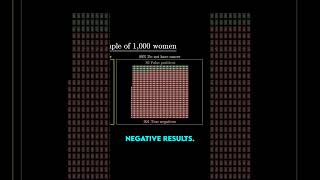
The medical test paradox (well "paradox")
- Rank 3:

Large Language Models explained briefly
- Rank 4:

How are holograms possible?
- Rank 5:
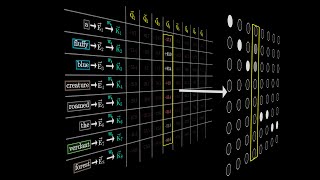
Attention in transformers, step-by-step | Deep Learning Chapter 6
- Rank 6:

The inscribed square problem
- Rank 7:

How word vectors encode meaning
- Rank 8:

How I animate 3Blue1Brown | A Manim demo with Ben Sparks
- Rank 9:

A beautiful international math olympiad problem
- Rank 10:
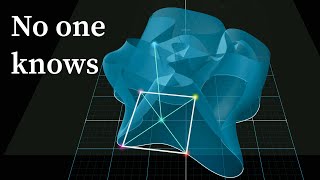
This open problem taught me what topology is
- Rank 11:

Monge's Theorem
- Rank 12:

A bizarre probability fact
- Rank 13:

How might LLMs store facts | Deep Learning Chapter 7
- Rank 14:

Holograms are wild (full video linked above)
- Rank 15:

The cube shadow puzzle
- Rank 16:

Solving problems by adding a dimension
- Rank 17:

Sphere surface area proof sketch
- Rank 18:

What "Follow Your Dreams" Misses | Harvey Mudd Commencement Speech 2024
- Rank 19:

Why does light slowing imply a bend? (Beyond the tank/car analogy)
- Rank 20:

This puzzle is trickier than it seems
- Rank 21:
Simulating the electric field and a moving charge
- Rank 22:

The meaning within the Mandelbrot set
- Rank 23:

A challenging puzzle about subset sums
- Rank 24:

The scale of training LLMs
- Rank 25:

Thinking through double slits
- Rank 26:

The Triangle Of Power
- Rank 27:

In the vector space of all advice...
- Rank 28:

Temperature in LLMs
- Rank 29:
Positioned as the hardest question on a Putnam exam (#6, 1992)
- Rank 30:

The twirling tiles puzzle
- Rank 31:

Why do we call them "scalars"?
- Rank 32:

Definition of a "bit", in information theory
- Rank 33:

LLMs are next-word predictors
- Rank 34:

Newton’s Fractal is beautiful
- Rank 35:
What does it mean that light "slows down" in glass?
- Rank 36:

Three levels of understanding Bayes' theorem
- Rank 37:

Hologram preview
- Rank 38:

Ellipses have multiple definitions, how are these the same?